
Posted by Sibun | Posted in | Posted on Friday, April 29, 2011
There’s much to like about Apple’s newly unveiled iPhone 4, notably its front-facing camera for video calls, high-resolution Retina Display screen and thin form factor housed in glass and stainless steel. But not everyone wants an iPhone, either due to the lock-in to Apple’s software ecosystem, issues with AT&T’s network or some other reason. Spec for spec, no two phones are exactly alike; here are 10 best iPhone alternatives either currently or soon to be available. While they may fall short by comparison in some areas, they rival or exceed


HTC Incredible — This is the current flagship phone for Verizon, and with good reason. The 3.7-inch, 800×480 touchscreen is slightly bigger than that of the iPhone 4 and while it doesn’t offer a high-resolution Retina Display, it’s still stunning thanks to OLED technology. The Incredible comes with 8 GB of internal memory but can also use memory cards containing up to 32 GB. It also sports an FM radio — a feature that iPhone 4 lacks. HTC included a beefy 8-megapixel camera with auto-focus and dual flash, so stills or video are a snap, although it can’t yet do full 720p video like the iPhone 4. One negative: that OLED screen is difficult to see in direct sunlight.


Palm Pre Plus — At $50, you’re paying a lot less than you would for an iPhone 4, but you get a solid smartphone experience. Pre Plus offers a touchscreen with the same resolution as prior iPhones but also includes a slide-out keyboard for text entry. The device runs on the webOS platform, an interface that rivals or exceeds that of Apple. One downside to this phone is a vastly smaller number of software titles available — a few thousand as compared to the 250,000 in Apple’s iTunes App Store.


HTC HD2— One of the first phones to use a peppy 1 GHz Qualcomm processor, the HD2 is thin and all screen — the 800×480 touchscreen is a whopping 4.3 inches. HTC developed a touch-friendly interface called HTC Sense for the HD2, which runs atop Microsoft’s Windows Mobile operating system. That opens up the device to a large number of third-party applications and great integration with other Microsoft products such as Office, but Windows Mobile is in need of an overhaul. Still, when paired with HTC Sense on a big screen and a fast processor under the hood, this is a contender, as shown in our hands-on video overview. And it’s one of the first Windows Mobile devices to use a capacitive display, not a resistive one, like the iPhone


myTouch 3G Slide— The latest Android 2.1 handset to arrive on T-Mo looks like last year’s model with a keyboard and optical track pad added, but it’s much more. Three software features take it beyond the iPhone in some ways: extensive voice control, social network updates from favourite contacts and multiple phone themes that automatically switch based on time or location. The phone has access to more than 50,000 applications in the Android Market and T-Mobile offers its own App Pack for the device. Although the Slide has a full 3.4-inch touchscreen, the 4-row QWERTY keyboard is highly usable for those that prefer a hardware keyboard. Like the HD2, this phone has the Sense user interface, which hides some of Android’s blandness.

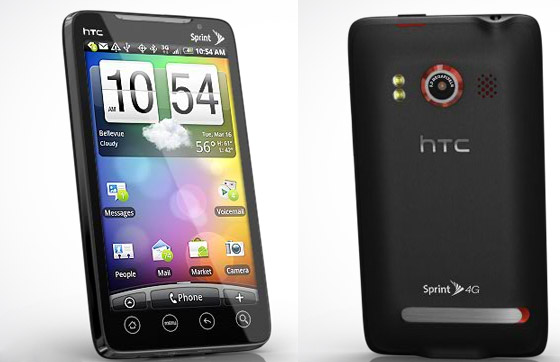
HTC EVO 4G— The EVO offers something that no iPhone has, or will likely have for at least a full year: access to a fast, next-generation network. This 4G phone connects to Sprint’s WiMAX network, offering real-world speeds that are roughly three times greater than today’s 3G phones. Like the HD2, the EVO has a generous 4.3-inch display and like the iPhone, can record 720p video thanks to the 8-megapixel camera and speedy processor.

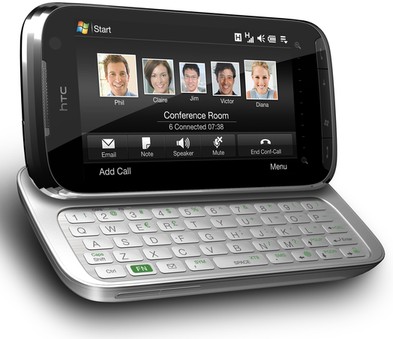
HTC TouchPro 2 — This handset is a bit long in the tooth, but it’s one of the better Windows Mobile touchscreen devices on the market, plus it offers a stellar, 5-row slide-out keyboard and the best speakerphone I’ve ever used. It comes with Microsoft Office Mobile for productivity, but can still play your favourite audio and video clips when it’s time for fun. Even though it’s an older model, it does have a high-resolution, 3.6-inch display and 3.2-megapixel camera. The biggest downside is that this phone is unlikely to see any future upgrades from Microsoft and given that, it’s priced high compared to newer, more powerful handsets.


Dell Streak- The Streak is big, with a 5-inch touchscreen display, but that size brings a better experience for reading, browsing or watching media. Like many other manufacturers today, Dell opts to use Google’s Android platform for the phone, but also created an in-house, finger-friendly shell for it. The Streak also offers two cameras: 5 megapixels in the back and a lower-quality sensor for the front, to be used for video chatting. Unfortunately, Dell is planning to ship the Streak with Android 1.6, which is already out-dated.


Blackberry Torch 9800- RIM really hasn't made a good start to the touchscreen market with the Storm and Storm 2. Both had an awful clicky screen that was nowhere near as responsive as a capacitive screen and typing was a chore, although this did improve with the Storm 2.
Now comes the 9800 Torch, which is a bulky device, but the best so far from the Canadian manufacturer.
The 3.2-inch screen looks larger than its competitors because it's square rather than long and thin. At 360 x 480 pixels, it may not be the highest resolution, but this hardly means much - after all, it's what the display looks like rather than numbers, isn't it?With 16 million colours, it's vibrant and bright. The best thing about that screen though is that it's hugely responsive, reacting to every slight touch.
This is a massive improvement over the Storm 2 with its clicky SurePress technology. Thankfully, this has been scrapped and we're now very impressed.
Now comes the 9800 Torch, which is a bulky device, but the best so far from the Canadian manufacturer.
The 3.2-inch screen looks larger than its competitors because it's square rather than long and thin. At 360 x 480 pixels, it may not be the highest resolution, but this hardly means much - after all, it's what the display looks like rather than numbers, isn't it?With 16 million colours, it's vibrant and bright. The best thing about that screen though is that it's hugely responsive, reacting to every slight touch.
This is a massive improvement over the Storm 2 with its clicky SurePress technology. Thankfully, this has been scrapped and we're now very impressed.

Google Nexus One
There are some argue that Google should stick to search-engines, here is a smart-phone that tells us something entirely different.The Nexus One is Google’s flagship smartphone that became available this January. It uses the Android open source mobile operating system.
It has a couple of great features, like the ability to transcribe voice to text, noise canceling and dual microphones. If you drive a lot, the Nexus would be perfect for you seeing as it has a fantastic GPS system.
The Nexus One has a 3.7 inch AMOLED screen and the raster resolution is 480×800 pixels.
The phone has a 5.0 megapixel auto-focus camera with LED flash and digital zoom, Bluetooth 2.1, MP3, AAC+, WAV and MIDI playing capabilities.

Samsung i9000 Galaxy S
Samsung announced its i9000 Galaxy S model in March 2010, and it is now confirmed to be an Android 2.2 smartphone. What’s so special about this model is its 1GHz processor along with 8-16 GB internal memory, a 4 inch 480×800 Super AMOLED widescreen, a touchscreen display, a 5 megapixel camera and also a VGA front-facing camera. Another useful thing about the Galaxy is its PowerVR graphics processor that yields 90 million triangles per second. All of this makes this Samsung the best darn Android-phone on the market.
Another great thing that would push buyers to seriously consider buying the Galaxy is its Bluetooth 3.0. It is also worth mentioning that, with its 9.9mm, it’s the thinnest Android phone available.


Comments (0)
Post a Comment